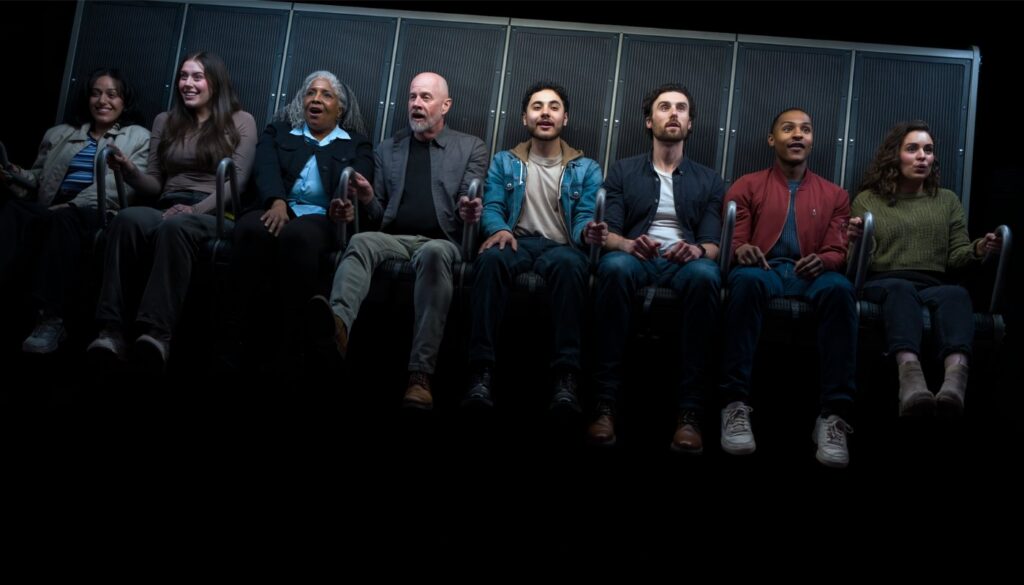
Every Flyover immersive experience requires an incredible amount of planning and coordination to capture the beauty of a location. A talented team of creatives and planners work together for months to scout, coordinate, compose and pull together this ambitious project.
Once a Flyover location gets the green light, it can take up to two years to integrate the experience into its new space. And while every Flyover requires precision and perseverance to fit the pieces together just right, Chicago’s build included an extra consideration — how do you fit 175 tons of equipment into a pre-existing building on a pier?
“The space was an old IMAX theater located on historic Navy Pier,” explains Eric Sambell, Flyover’s global director of construction and entertainment technology. “We had to design the structure specifically to line up with the pier supports and use the limited available space to incorporate all the experience elements.”
The Navy Pier project’s success came courtesy of the construction team Sambell is part of — a core group of 12 , with many more contractors and employees who played a role in bringing Flyover to Chicago.
When a new Flyover is conceptualized, Sambell and the team make sure the space is equipped to handle the latest Flyover experience, plus any existing experiences. And thanks to never-before-used FPV drones, the Navy Pier signature experience Believe Chicago pushed Flyover’s tech further than any adventure with its thrilling dives and tight turns.
“It’s not that we had different equipment from the other attractions,” says Sambell. “We really pushed the ride system harder on this one because of the nature of the film.”
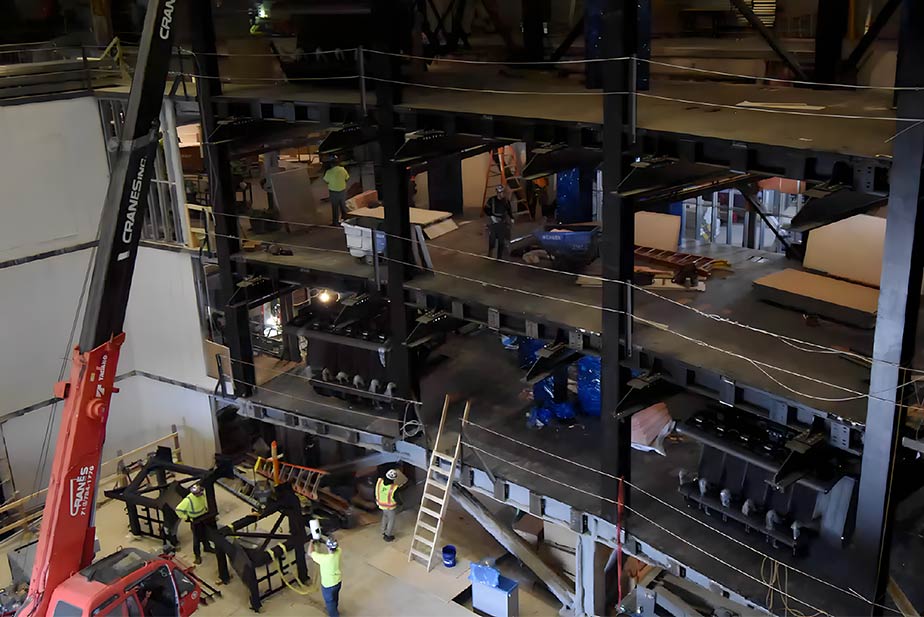
Despite countless hours of prep, building and troubleshooting, Sambell says his goal is for his work to go undetected. Each visitor should be immersed in the magic of Flyover rather than thinking about the technology that makes it possible. But you can be sure the technology is there. For example, the audio of each flying journey is delivered through 158 speakers — 34 on the screen, four subwoofers and 120 speakers in the seats. And that doesn’t include the 36 additional speakers in the Act II theater.
All the behind-the-scenes effort culminates in the incredible Flyover experience guests enjoy today. And what does Sambell feel now that it’s complete? “Relieved,” he laughs. “It’s nice when all the little things you think about along the way come together and work as planned. It’s a great feeling.”
Watch the video above to learn how the Flyover team fit everything into Navy Pier, and how the process works from the beginning of construction to the first adventure.