“Everything dope about America comes from Chicago.”
 For Shermann “Dilla” Thomas, it’s a trend that comes up time and time again. As an urban historian and the guide behind Chicago Mahogany tours, Dilla has shared the city’s historic contributions to the country (and the world beyond) since 2020.
What started as a series of Facebook posts grew into a TikTok community, where the Chicago ambassador has amassed more than 100,000 followers from his quick-hit history lessons.
In 2023, Dilla lent his local knowledge and love for the city to Flyover — consulting on the brand-new immersive Chicago experience ahead of its spring 2024 launch. His expertise helped create a more authentic adventure, and one that highlights the true story of Chicago.
Here, Dilla shares his six must-visit spots in Chicago. From neighborhoods brimming with global flair to museums exploring the city’s biggest moments, check out Dilla’s Chicago by adding these essential spots to your itinerary.
1. Ping Tom Park
Watch kayakers paddle by, swim laps in the indoor pool and marvel at some of the city’s best skyline views at this waterside park.
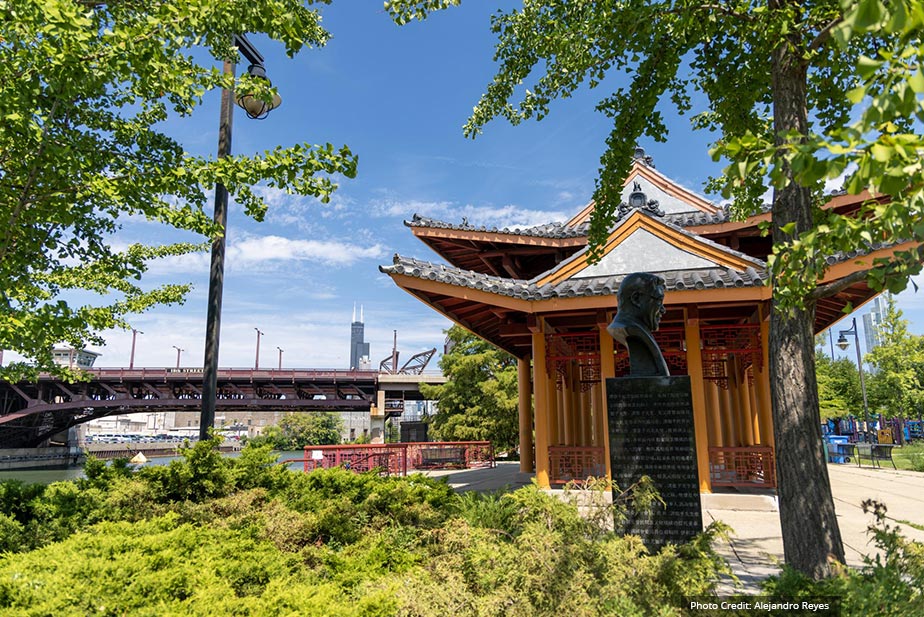
Located along the South Branch of the Chicago River, Ping Tom Park filled a 30-plus year gap for park space near the city’s growing Chinatown. “Ping Tom Park was one of the times that the community mobilized and raised a little hell,” says Dilla. “And it turned out to be really, really awesome.”
FUN FACT: Formerly an abandoned railyard, Ping Tom Park was reinvigorated by renowned landscape architect Ernie Wong.
2. Museum of Science and Industry
Explore discoveries made, massive leaps forward and the future of science at this innovative and interactive destination.
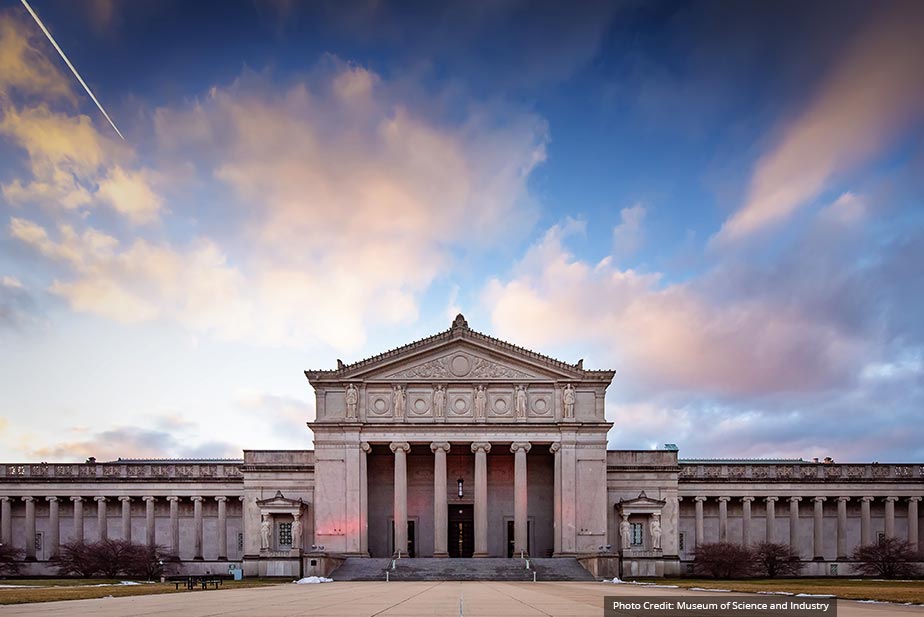
Located in Jackson Park, the main site of the historic 1893 World’s Columbian Exposition, the Museum of Science and Industry (MSI) is home to rotating interactive exhibits plus long-time favorites. Don’t miss the subterranean coal mine tour or the scale model of the city in “The Great Train Story” exhibit. “Even if you only get to go to the museum, the microscale allows you to see the entirety of Chicago,” says Dilla.
FUN FACT: Of the 200-plus structures built for the 1893 World’s Columbian Exposition, the MSI (originally the Palace of Fine Arts) is one of only two still standing. The other — now the Art Institute of Chicago Building — can be found in the Loop.
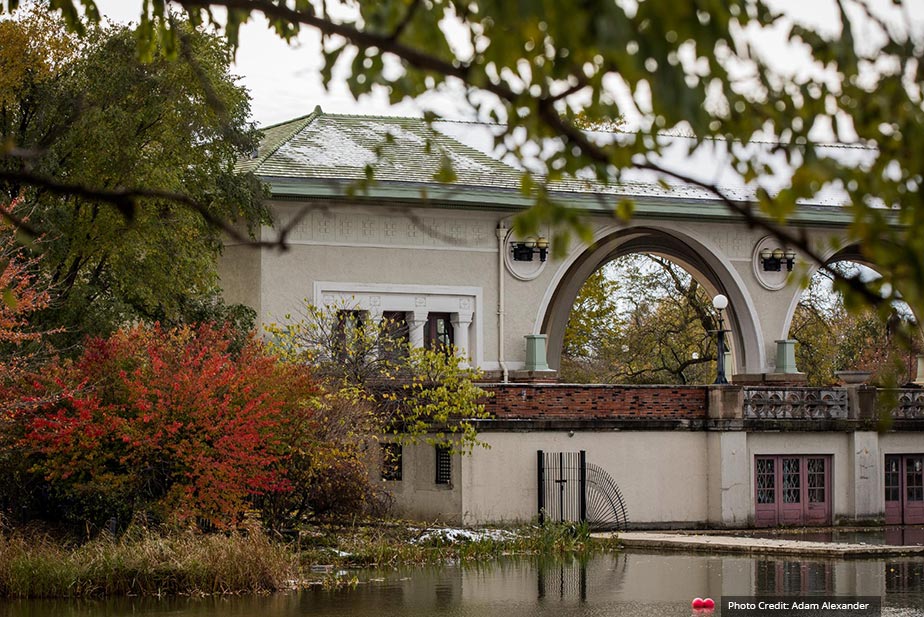
3. Humboldt Park Boathouse
You’ll find the mark of legendary landscape architect Jens Jensen in Humboldt Park, where the boathouse, with its striking arches, offers a perfect outlook over the lagoon.
Work up an appetite while exploring? Dilla suggests heading under the nearby Puerto Rican flags and trying a Chicago creation. “While you’re there, you can go on Division Street and get a jibarito,” says Dilla. “It’s basically steak or chicken sandwich cooked with the Puerto Rican flair and instead of bread, it’s two plantains.”
FUN FACT: Humboldt Park was the temporary home of “Chance the Snapper” — an illegal pet alligator who was released into the lagoon. Chance was rescued in 2019 and now resides at St. Augustine Alligator Farm Zoological Park in Florida.
4. The DuSable Black History Museum and Education Center
Set in a historic building within Washington Park, The DuSable is the United States’ longest continuously running African American museum.
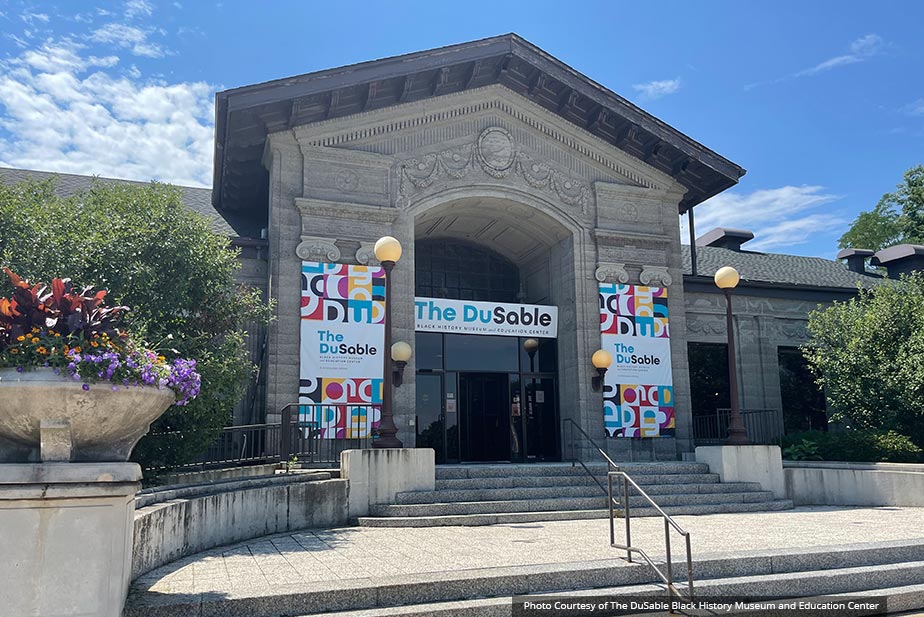
Celebrating, honoring and exploring Black culture in America and beyond, the museum features paintings, sculptures and historical memorabilia, along with exhibitions on everything from the transatlantic slave trade and civil rights movement to stories of African American troops in the First World War and artists throughout history. Simply put by Dilla: “The DuSable should be a stop on every visit to Chicago.”
FUN FACT: The DuSable Museum was named after Haitian-born trader Jean-Baptiste Pointe DuSable, recognized as Chicago’s first permanent settler and the city’s founder.
5. Pullman National Historic Park
“The neighborhood of Pullman gave the country Labor Day as a concept,” explains Dilla of the former Pullman Railroad company town, designated as Chicago’s first National Park Service unit in 2015.
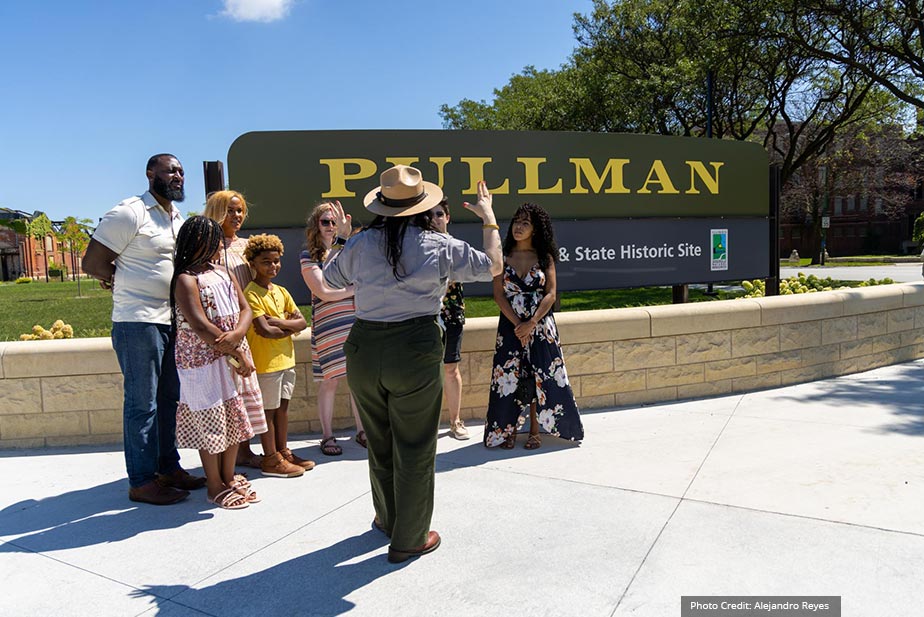
Now home to museums, parks and historic exhibit halls, the neighborhood was once the site of the 1894 Pullman Strike — a walkout and boycott that halted train traffic to 27 states. President Grover Cleveland dispatched federal troops to break up the strike, leading to a violent clash with workers. To re-establish labor support during the aftermath, President Cleveland and Congress designated Labor Day as a federal holiday just six days after the strike ended.
FUN FACT: The Pullman Porters formed the first recognized Black union in the United States — the Brotherhood of Sleeping Car Porters — in 1925. Learn more at the park’s National A. Philip Randolph Pullman Porter Museum.
6. Little Village Clock
Head through the 26 Street archway near Albany Avenue and into Little Village to find south-of-the-border vibes in Chicago. “It’s just like you’re in Mexico, but not in Mexico,” says Dilla. “It’s just a beautiful thing.”
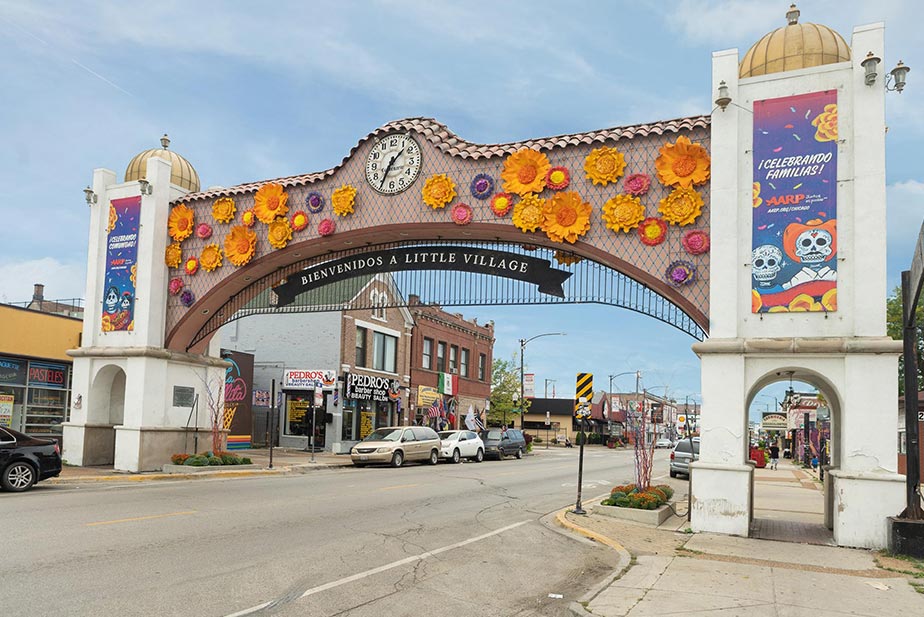
Make sure to come hungry. Little Village (or “La Villita”) is home to some of the city’s best Mexican American owned restaurants, bakeries and taco stands on both sides of 26 Street. “It’s hard to not eat great in Little Village,” says Dilla. “You’ll leave 10 pounds heavier walking out of there.”
FUN FACT: The archway’s clock was presented as a gift to the community in 1991 from then-President of Mexico, Carlos Salinas de Gortari.
Explore even more of the city at Flyover in Chicago and dig deeper into its past by following Dilla on TikTok or Instagram.